
On this page
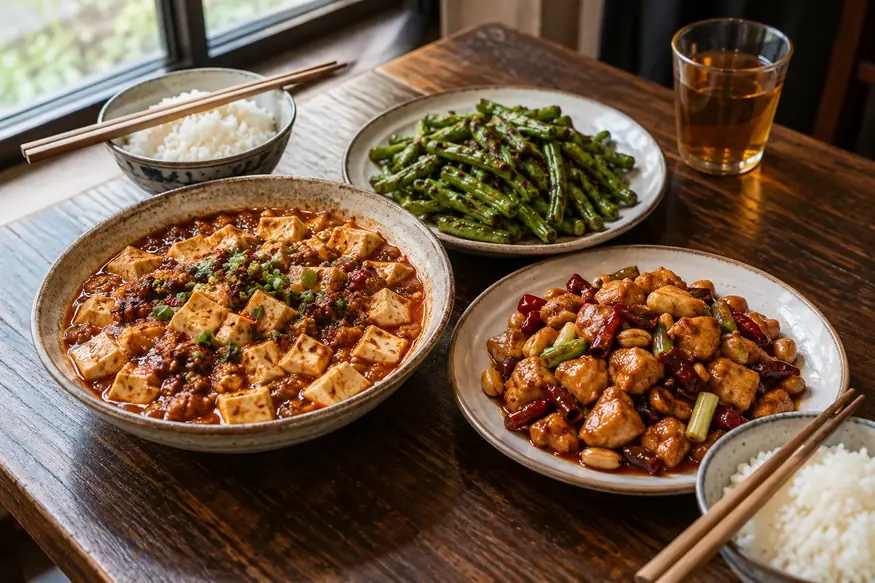
Build a balanced first meal.
Choose a dish you know, something new, vegetables and rice. Leave room to share.
Find your first dishesHow Sichuan food works
Sichuan cooking is often reduced to “spicy”, which is like describing Italian food as “tomato”. Heat is one layer. The cuisine is built on fermented broad-bean paste (豆瓣酱, dòubànjiàng), pickled vegetables, sweet soy, black vinegar, garlic, ginger and the citrus-like tingle of Sichuan pepper. A good Sichuan dish is balanced first and hot second.
The flavours to recognise
- 麻辣 (málà): numbing and hot together. The “ma” is Sichuan pepper; the “la” is chili. They are different sensations and arrive at different times.
- 香辣 (xiānglà): fragrant-hot. More aroma, usually less numbing.
- 酸辣 (suānlà): sour-hot, often with black vinegar. Common in noodle dishes and soups.
- 鱼香 (yúxiāng): “fish-fragrant”, a sweet-sour-garlic seasoning with no fish. Used on eggplant, pork and tofu.
- 怪味 (guàiwèi): “strange flavour”, a deliberate mix of sweet, sour, hot, numbing and sesame. Try it once before deciding.
Chili bean paste and chili oil are often treated as seasoning rather than “spice”. If you truly cannot eat chili, say 一点辣都不要 (not a single bit of chili) and ask for a clear-broth dish. If you only want less heat, 微辣 is usually enough.
A simple ordering strategy
For two people, order one hot dish, one mild dish, one vegetable and rice. For three or four, add a soup and a cold dish. Sichuan restaurants serve food for sharing, so portions arrive in the middle of the table. Do not order a hotpot and three stir-fries for two people; it is too much food.
- Start with one familiar dish and one unfamiliar one.
- Keep a mild anchor on the table: rice, a clear soup, a sweet-and-sour dish or a plate of greens.
- Drink soy milk, sour plum drink or tea rather than relying on beer to cool your mouth.
- If the menu is only in Chinese, use a translation app on the dish names, or ask for the restaurant’s picture menu.
16 dishes to try
These are everyday dishes rather than a definitive canon. Recipes vary by restaurant and by home cook; the descriptions below are a guide to what will arrive, not a promise of one exact version.
Mapo tofu
麻婆豆腐mápó dòufu
Numbing, hot, savory
Silken tofu in a glossy sauce of fermented broad-bean paste and minced meat, finished with ground Sichuan pepper. Ask for 微辣 if you want the aroma without the full heat.
Kung pao chicken
宫保鸡丁gōngbǎo jīdīng
Sweet, sour, lightly hot
Diced chicken, dried chilies, peanuts and scallion in a sweet-sour sauce. One of the mildest entry points, though the dried chilies are not meant to be eaten.
Twice-cooked pork
回锅肉huíguō ròu
Savory, rich, mildly hot
Pork belly boiled then stir-fried with leek and fermented bean paste. The fat is part of the point; ask for less oil if that is not for you.
Fish-fragrant eggplant
鱼香茄子yúxiāng qiézi
Sweet, sour, garlicky
No fish involved. “Fish-fragrant” is a seasoning style of pickled chili, garlic, ginger, sugar and vinegar. Usually mild and very easy to like.
Fish in chili oil
水煮鱼shuǐzhǔ yú
Hot, aromatic, oily
White fish fillets poached and then covered in sizzling chili oil. The fish itself is mild; the oil is not. Order 微辣 or ask for the broth served separately.
Dan dan noodles
担担面dàndàn miàn
Sesame, chili, savory
A small bowl of noodles with sesame paste, chili oil, minced pork and preserved vegetables. Mix thoroughly before eating; the heat sits at the bottom.
Sweet water noodles
甜水面tiánshuǐ miàn
Sweet, garlicky, hot
Thick, chewy noodles in a dark sweet-soy sauce with chili and raw garlic. A Chengdu snack-bar classic, and more filling than it looks.
Zhong dumplings
钟水饺zhōng shuǐjiǎo
Sweet, garlicky, lightly hot
Pork dumplings in a sweet red-oil sauce. Order a small portion as a snack rather than a main.
Long wontons
龙抄手lóng chāoshǒu
Savory; clear or red-oil broth
Thin-skinned pork wontons. Ask for 清汤 (clear broth) if you want a mild version; the red-oil version is the local default.
Sliced beef in chili oil
夫妻肺片fūqī fèipiàn
Numbing, hot, savory
Thin slices of beef and offal with peanuts and chili oil. Despite the name, it is not lung. A good shared cold dish.
Hotpot
火锅huǒguō
Rich, hot, numbing
A bubbling pot of broth for cooking meat, vegetables and tofu at the table. Choose a split pot if you want a mild side. See the hotpot section below.
Skewer hotpot
串串香chuànchuàn xiāng
Hot, numbing, casual
Ingredients on bamboo skewers cooked in a shared pot and paid by the skewer. Cheaper and more informal than sit-down hotpot.
Maocai
冒菜màocài
Hot, savory, soupy
A single-person bowl of vegetables, tofu and meat cooked in spicy broth. The easiest way to eat hotpot flavours alone.
Cold skewers in chili oil
钵钵鸡bōbō jī
Cold, numbing, sesame
Chilled skewers of chicken, vegetables and offal served in a bowl of chili oil and sesame. A good summer snack.
Crisp flatbread
锅盔guōkuī
Toasty, chewy or flaky
A baked or pan-fried flatbread, plain or filled with minced meat. Portable, cheap and easy to find near markets and metro stations.
Ice jelly
冰粉bīngfěn
Cold, sweet, lightly floral
A clear jelly made from ice-jelly seeds, served with brown sugar syrup, peanuts and sometimes fruit. The best way to cool down after hotpot.
If you only have one meal
Order mapo tofu, a plate of leafy greens, and a bowl of dan dan noodles to share. That gives you the numbing, the savory and the sesame-chili range of the cuisine without overwhelming the table. Add ice jelly afterwards.
What “Sichuan pepper” actually does
Sichuan pepper (花椒, huājiāo) is not a chili and not related to black pepper. It creates a tingling, slightly electric sensation on the lips and tongue, which is why it is described as numbing. It is usually toasted and ground just before cooking. If you dislike the sensation, it is easy to ask for it to be left out; the dish will still be hot from chili.
Ordering and spice levels
Most restaurants in central Chengdu can handle a simple spice request. The useful vocabulary is small, and a translation app fills the rest. What matters is being specific: “less spicy” means different things to different kitchens.
How to ask
- 微辣 (wēi là) — mildly spicy. The safest general request, but still hot by many visitors’ standards.
- 一点辣都不要 (yīdiǎn là dōu bùyào) — no chili at all. Clearer than 不辣, which may still include chili bean paste.
- 少放辣椒 (shǎo fàng làjiāo) — use less chili. Good for stir-fries and noodles.
- 不要花椒 (búyào huājiāo) — no Sichuan pepper. Removes the numbing sensation, not the heat.
- 清汤 (qīngtāng) — clear broth. Useful for hotpot, wontons and noodle soup.
- 白味 (báiwèi) — plain seasoning, no chili. Understood in many snack shops.
At the table
- Menus: many places use a QR code on the table. If you do not have a Chinese payment app set up, ask for a paper menu (有纸质菜单吗? yǒu zhǐzhì càidān ma?).
- Tea and tissues: a small tea charge (茶位费) is normal in sit-down restaurants, and packaged tissues may be charged. Ask if you are unsure.
- Tipping: not expected and can cause confusion. Service is included.
- Water: do not drink tap water. Bottled or boiled water is standard; restaurants will bring hot water or tea.
- The bill: say 买单 (mǎidān) or 结账 (jiézhàng). Mobile payment is the norm; cash is accepted but may slow things down.
Portions are designed for sharing. A single diner should order one dish plus rice, or choose a noodle, dumpling or maocai shop. Many hotpot places now offer single-person pots; ask for 小锅 (xiǎoguō).
Phrase table
Show the Chinese column to staff if pronunciation is difficult. These phrases are practical rather than exhaustive; they cover the situations that come up most often.
| Chinese | Pinyin | English |
|---|---|---|
| 微辣 | wēi là | Mildly spicy, please. |
| 一点辣都不要 | yīdiǎn là dōu bùyào | No chili at all. (Clearer than 不辣.) |
| 少放辣椒 | shǎo fàng làjiāo | Use less chili. |
| 不要花椒 | búyào huājiāo | No Sichuan pepper — I do not want the numbing sensation. |
| 不要香菜 | búyào xiāngcài | No cilantro. |
| 不要葱 | búyào cōng | No scallion. |
| 不要蒜 | búyào suàn | No garlic. |
| 有清汤吗? | yǒu qīngtāng ma? | Is there a clear broth? |
| 我吃素 | wǒ chī sù | I am vegetarian. |
| 全素,不要肉,不要动物油 | quán sù, búyào ròu, búyào dòngwùyóu | Fully vegetarian: no meat and no animal fat. |
| 我对花生过敏 | wǒ duì huāshēng guòmǐn | I am allergic to peanuts. |
| 我对海鲜过敏 | wǒ duì hǎixiān guòmǐn | I am allergic to seafood. |
| 我对坚果过敏 | wǒ duì jiānguǒ guòmǐn | I am allergic to tree nuts. |
| 我对鸡蛋过敏 | wǒ duì jīdàn guòmǐn | I am allergic to eggs. |
| 我对牛奶和乳制品过敏 | wǒ duì niúnǎi hé rǔzhìpǐn guòmǐn | I am allergic to milk and dairy. |
| 不要放味精 | búyào fàng wèijīng | No MSG, please. (Optional; many kitchens use it by default.) |
| 米饭 | mǐfàn | Steamed rice. |
| 买单 / 结账 | mǎidān / jiézhàng | The bill, please. |
| 打包 | dǎbāo | Please pack the leftovers to take away. |
Allergies and dietary needs
Sichuan kitchens are busy, woks are shared and cross-contact is difficult to rule out. If you have a serious allergy, carry a written Chinese card, show it before ordering, and choose a restaurant where staff can read it. For a severe allergy, a translated card and a hotel concierge are more reliable than pronunciation.
Written allergy card
Show this to the server before ordering. Replace the first line with the relevant allergen.
我对花生严重过敏。请确认这道菜不含花生,也没有用花生油。如果无法确认,请不要下单。谢谢。
I have a severe peanut allergy. Please confirm this dish contains no peanuts and is not cooked in peanut oil. If you cannot confirm, please do not serve it. Thank you.
我对海鲜(虾、蟹、贝类)严重过敏。请确认菜品、汤底和酱料都不含海鲜。
I have a severe seafood allergy (shrimp, crab, shellfish). Please confirm the dish, broth and sauces contain no seafood.
我是素食者。请不要放肉、动物油、鸡汤或鱼露。
I am vegetarian. Please use no meat, animal fat, chicken stock or fish sauce.
Allergy notes that matter in Chengdu
- Peanuts and sesame: common in cold dishes, noodles, dumpling sauces and hotpot dips. Ask about both the dish and the oil.
- Shellfish and fish: hotpot broth may include dried shrimp or fish; seafood balls and fish paste are common. Ask about the base, not just the items you order.
- Soy and wheat: soy sauce, doubanjiang and many marinades contain wheat. Gluten-free is not a widely understood request; a written card helps, but a shared kitchen is still a risk.
- Egg and dairy: less central to Sichuan cooking than in Western food, but egg is used in noodles, fried rice and some snacks. Dairy appears mostly in drinks and desserts.
- MSG: widely used and generally recognised as safe in normal amounts. You can ask for it to be left out (不要放味精), but it may already be in a prepared sauce.
Vegetarian, vegan and halal
Vegetarian food exists, but “vegetable dish” does not always mean meat-free: lard, chicken stock or dried shrimp may be used. Say 全素 (fully vegetarian) and list what you do not eat. Buddhist restaurants near temples are the safest bet; Wenshu Monastery has a vegetarian restaurant.
Halal restaurants are marked 清真 (qīngzhēn). Pork and lard are common in Sichuan cooking, and hotpot broth may use beef tallow, so ask about both the meat and the fat. In doubt, choose a clearly marked halal restaurant rather than asking a general kitchen to adapt.
Hotpot, step by step
Hotpot is the centrepiece of a Chengdu evening, and it is easier than it looks. You order a broth, order raw ingredients, cook them at the table and eat them with a sesame-oil dip. The social part is the point: the pot stays on, the conversation continues and nobody rushes.
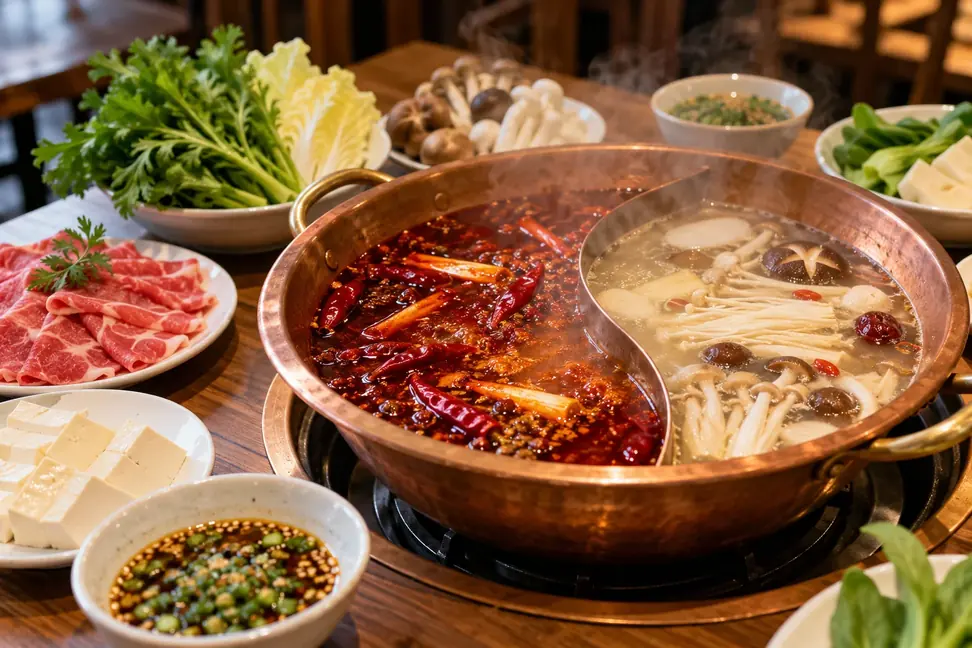
1. Choose the broth
- 牛油锅 (niúyóu guō): beef-tallow base, rich and heavily spiced. The classic Chengdu choice.
- 清油锅 (qīngyóu guō): vegetable-oil base, lighter but still hot.
- 鸳鸯锅 (yuānyāng guō): split pot with a mild broth on one side. The obvious choice for mixed groups.
- 番茄锅 / 菌汤锅: tomato or mushroom broth, usually mild and good for children or anyone avoiding chili.
2. Order the ingredients
A reasonable order for two or three people is three or four meat or seafood items, three vegetables, one tofu or soy item and one starch. Popular choices: thinly sliced beef or lamb, pork slices, tripe, luncheon meat, shrimp paste, fish balls, tofu skin, potato, lotus root, enoki mushrooms, Chinese cabbage and sweet potato noodles. Do not order everything at once; add more if you are still hungry.
3. Cook and eat
- Thin meat slices cook in 10–20 seconds. Tripe is traditionally dipped seven or eight times, about 10–15 seconds; it should be crisp, not rubbery.
- Vegetables and root items need longer. Keep raw meat on one side of the table and use the serving chopsticks provided.
- Do not drink the broth. It is very salty and oily, and it has been cooking raw ingredients for an hour.
- Make a dip with sesame oil, minced garlic, cilantro, oyster sauce and a little vinegar. Add chili only if you want more heat.
4. Finish
Order ice jelly or a bowl of fruit to cool down, and drink soy milk or sour plum juice rather than more beer. Expect ¥80–150 per person without alcohol, more at shiny chain restaurants. Tipping is not expected.
Chuanchuan (串串香) is hotpot on skewers, paid by the stick and usually cheaper. Maocai (冒菜) is a single bowl cooked in the same kind of broth, with no shared pot. Both are good options for solo travellers or a quick lunch.
Breakfast and snacks
Chengdu breakfast is fast, cheap and eaten standing or at a small table. Shops open early and many close by mid-morning, so do not plan a late breakfast. Noodles and dumplings are acceptable at any hour.
- 包子 (bāozi): steamed buns with pork, vegetable or red-bean filling.
- 豆浆 (dòujiāng): warm soy milk, sweet or unsweetened. Ask for 无糖 (wútáng) if you do not want sugar.
- 油条 (yóutiáo): fried dough sticks, usually eaten with soy milk or rice porridge.
- 锅盔 (guōkuī): crisp flatbread, plain or filled with minced meat.
- 红油抄手 (hóngyóu chāoshǒu): wontons in chili oil. A solid sit-down breakfast.
- 肥肠粉 (féicháng fěn): rice noodles with pork intestine, a local favourite. Ask for 清汤 if you want it mild.
- 蛋烘糕 (dànhōnggāo): a small sweet or savory pancake cooked in a brass pan; a Chengdu street snack.
- 糖油果子 (tángyóu guǒzi): chewy rice-flour balls coated in caramel. Very sweet, best shared.
- 三大炮 (sāndàpào): sticky rice balls tossed in soybean flour and brown sugar; mostly a tourist-market spectacle, but fun once.
- 冰粉 (bīngfěn): ice jelly with brown sugar and peanuts; the default summer cooler.
Snack streets and markets
Jinli and Kuanzhai Alley are the most convenient places to try several snacks in one walk, but they are priced for visitors and crowded at weekends. For better value, look near universities, wet markets and older residential streets. A busy stall with a short menu and food cooked in front of you is usually a better bet than a long menu with photographs of everything.
Where to eat by neighborhood
Chengdu’s restaurant scene changes quickly, and specific businesses open and close. Rather than list names that may be gone by the time you arrive, use these areas and the signals below to choose a place on the ground.
Chunxi Road and Taikoo Li
Convenient, polished and full of chain restaurants, hotpot and dessert shops. Good for a first night or a group with mixed preferences. Prices are higher than in residential areas, and the food is reliable rather than memorable.
Yulin
A residential neighborhood with a dense everyday restaurant scene, from noodle shops to barbecue and small Sichuan kitchens. This is where to wander in the evening, choose a busy place and order without a plan. Use Amap to find the neighborhood, then walk.
People’s Park and Kuanzhai
Teahouses, snack stalls and courtyard restaurants. Good for a long lunch or an afternoon of grazing. The lanes are touristy, but the surrounding streets have ordinary noodle and dumpling shops at lower prices.
Wangping Street and the river
Riverside restaurants with outdoor seating, popular in the evening. The atmosphere is the draw; check prices before ordering seafood or large shared dishes.
Near universities
The streets around Sichuan University and other campuses have cheap, fast and varied food aimed at students. It is a good area for noodles, dumplings and small plates, and less polished than the city centre.
How to choose a restaurant
- Look for a busy room, a short menu and food being cooked to order.
- Check that prices are displayed. If there is no menu with prices, ask before ordering.
- Avoid anywhere with a tout outside or a menu translated into six languages and nothing else.
- For hotpot, a full room at 18:00 is a good sign; empty hotpot restaurants rarely improve later.
- If you have allergies, choose a place where staff will read a written card and answer questions.
Food is part of our everyday life in Chengdu. Tastes differ, and kitchens change. Use the dish descriptions and phrases here to find what suits you; a personal recommendation is not a promise that everyone will enjoy the same thing.
Sources and verification
- World Health Organization, five keys to safer food: who.int (opens in a new tab).
- Food Allergy Research & Education, allergen guidance: foodallergy.org (opens in a new tab).
- Sichuan Cuisine Museum, Pidu District, for background on the region’s cooking: cmuseum.com (opens in a new tab).
Page updated October 24, 2026. Dish descriptions are general and recipes vary by kitchen. Prices, opening hours and specific restaurants change; confirm on site. This page is not medical advice — if you have a serious allergy, travel with medication and a written plan.