

Chengdu Travel Guide
Discover Chengdu’s food, neighborhoods and everyday life. Practical English-language guides for a city that rewards slowing down.
Explore Chengdu
From panda mornings and Sichuan flavors to old teahouses and riverside evenings, discover the many sides of Chengdu. Find inspiration for your first visit or a fresh way to explore the city.


Start here
A city best understood slowly.
Chengdu is not a checklist. The pandas are extraordinary, but the city’s real texture is in teahouses, wet markets, river walks and lunches that turn into afternoons.
This guide is for visitors who want a confident first trip without racing through it. Sort out the practical details, choose a base that suits your pace, then leave space for the city to interrupt your plan. Everything below is written in plain English, with links to official sources where details can change.
Read the first-time guideA workable route
Plan the shape of your days.
The best first itinerary in Chengdu is grouped by neighborhood and paced like a holiday, not a site inspection. Our three-day route keeps one anchor per half-day and leaves the rest open.
Taste the city
Come hungry. Stay curious.
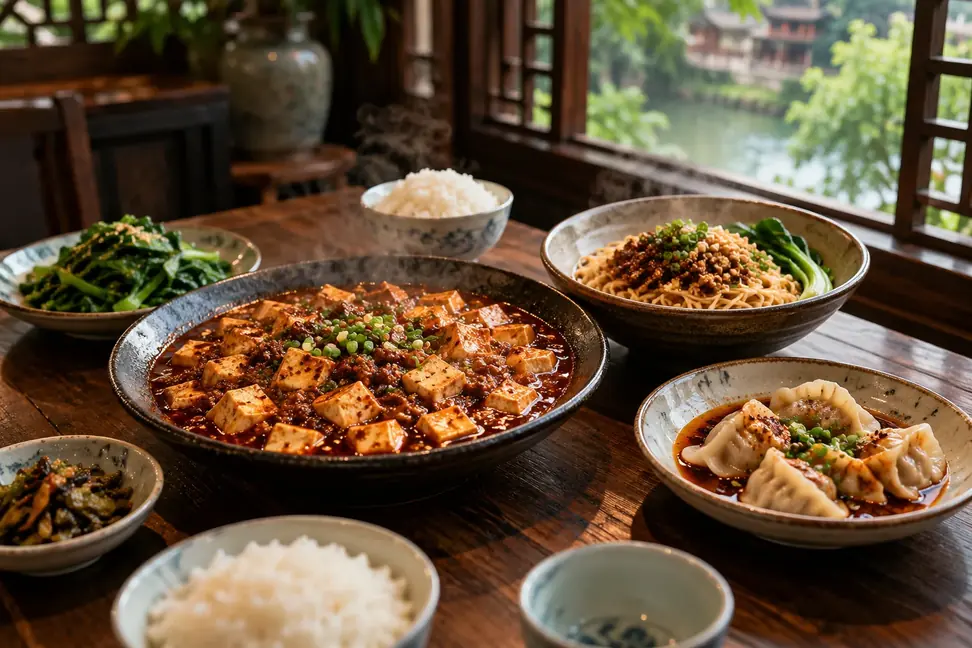
Sichuan cooking is more than heat. It is fragrance, fermented bean paste, sweet-and-sour balance and the citrus-like tingle of Sichuan pepper. Start with a handful of classics, then use the phrase sheet to order with confidence.
- Mapo tofu
- Dan dan noodles
- Zhong dumplings
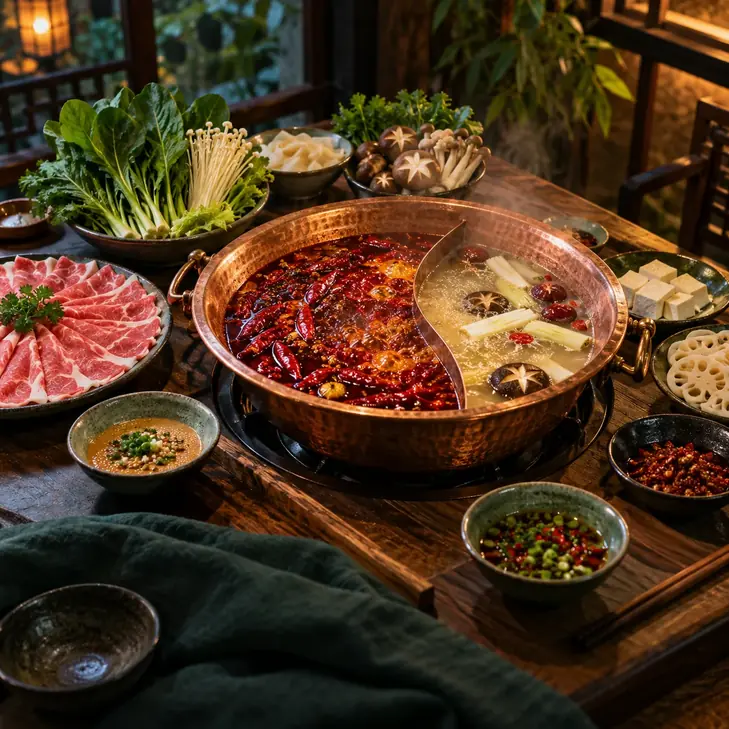
- Hotpot
Travel with confidence
The details that make the first day easier.
Payments, maps, airport transfers and weather are the things most likely to cause friction. The guides link to relevant sources so you can confirm changing details before you travel.
All first-visit essentialsWhen to visit
Four seasons, one humid basin.
Chengdu is mild but rarely crisp. Spring and autumn are the most comfortable windows; summer is hot, sticky and wet; winter is gray and damp rather than freezing. Rain is possible in every month.
Typical daytime ranges, based on long-term climate averages. Check a short-range forecast before packing.
Weather and packing detail| Season | Typical range | What it means for a visit |
|---|---|---|
| Spring Mar–May | 10–24°C | Comfortable walking weather, blossom and the first outdoor tea sessions. Pack a light rain layer. |
| Summer Jun–Aug | 22–30°C | Humid with heavy rain in July and August. Start early, plan an indoor midday break and carry an umbrella. |
| Autumn Sep–Nov | 15–25°C | The most reliable all-round season: comfortable temperatures, less rain and good panda-viewing weather. |
| Winter Dec–Feb | 3–11°C | Damp and overcast rather than snowy. Fewer visitors, hotpot weather and Spring Festival crowds in late January or February. |
Explore the neighborhoods
Chengdu, one neighborhood at a time.
Old lanes around People’s Park, the energy of Chunxi Road, slow afternoons in Yulin and evenings beside the river. Find the part of Chengdu that fits your kind of day.
Explore Chengdu’s neighborhoodsRead the map as text
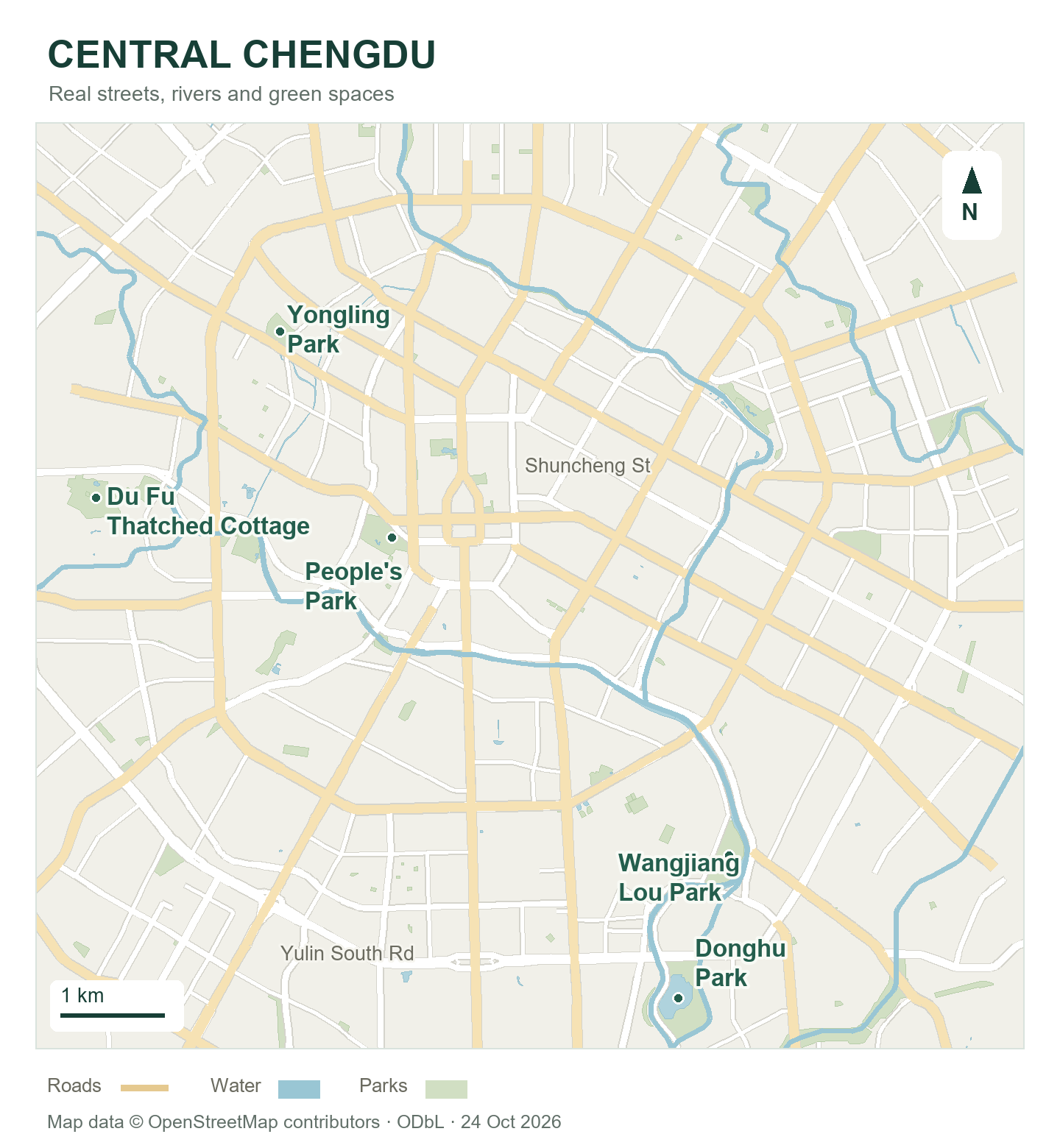
Tianfu Square is the central reference. People’s Park and Kuanzhai Alley are west; Chunxi Road and Taikoo Li are east. Wenshu Monastery is north, Yulin south, Jinli and Wuhou southwest, and Wangping Street beside the Fu River to the east.
Fashion. City lights. New energy.
Meet Chengdu’s
modern side.
Designer flagships, open-air lanes and a city that dresses up after dark. Around Taikoo Li and Chunxi Road, contemporary Chengdu comes into focus.
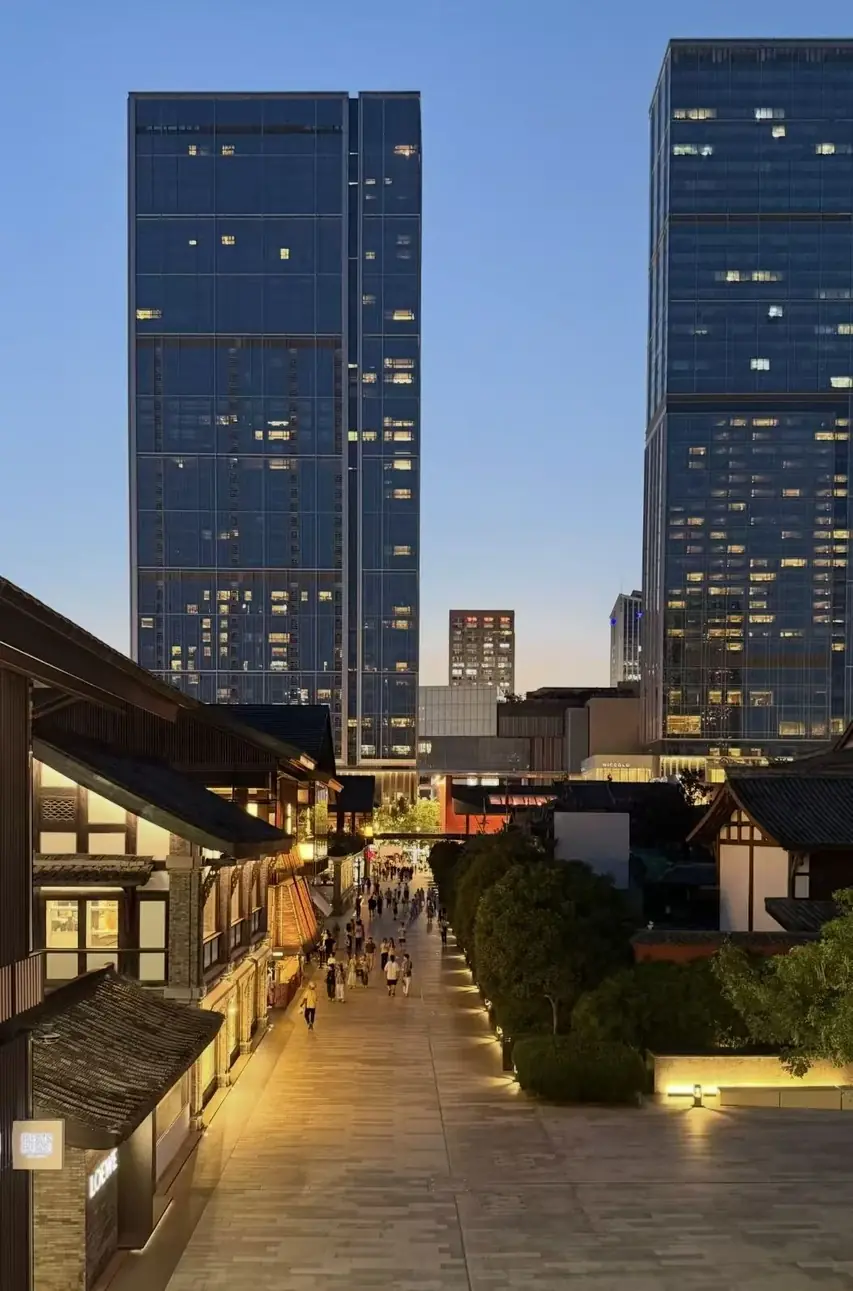
At Taikoo Li, luxury houses including Louis Vuitton, Hermès and Gucci sit among low-rise lanes and tiled roofs. Come for the fashion, stay for dinner and let the evening unfold.
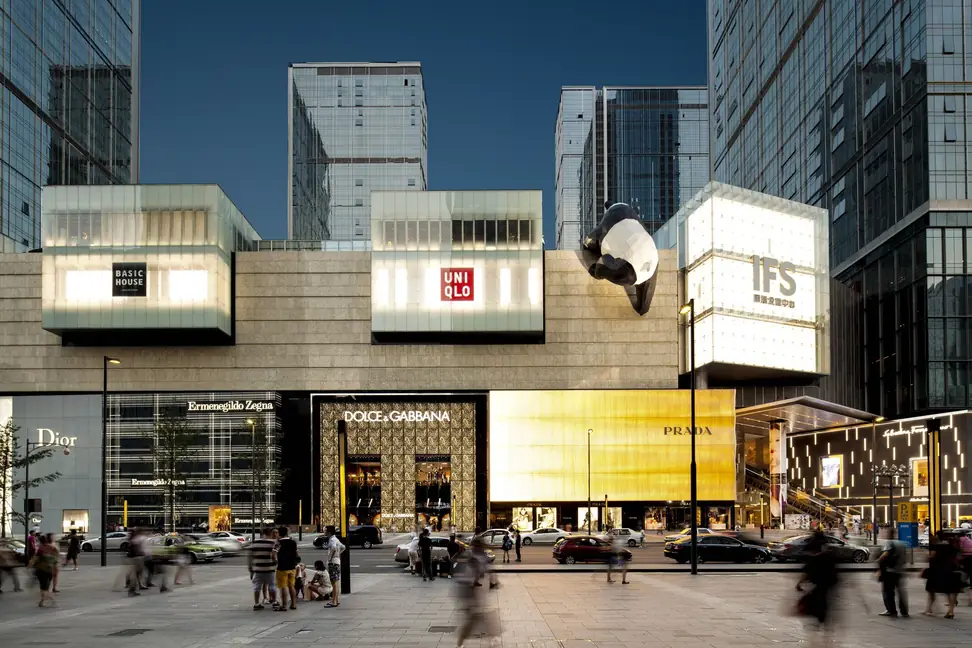
Fashion & design
Luxury maisons and street style, side by side.
After-dark energy
Dinner, illuminated streets and the city’s evening rhythm.
Old roofs, new ideas
Modern storefronts woven into Sichuan-style lanes.
First questions
What visitors ask first.
Short answers to the questions that shape a first booking. Each one links to the fuller guide where the details live.
How many days do I need in Chengdu?
Three full days covers the panda base, the central neighborhoods and a good introduction to the food. Four or five days leaves room for a slower teahouse afternoon, a museum and a day trip to Leshan or Dujiangyan.
Do I need a visa to visit Chengdu?
It depends on your passport. China currently allows 30-day visa-free entry for ordinary passport holders from a changing list of countries, and 240-hour visa-free transit for eligible travelers who meet specific conditions. Check the National Immigration Administration before booking. This guide cannot give immigration advice.
Can I use Google Maps in Chengdu?
Google Maps is unreliable in mainland China, and some Google services are not directly accessible on local networks. Apple Maps works with local data, and Amap (Gaode) is the most accurate option for transit and walking. Download offline maps before you fly.
Is Chengdu expensive?
It is generally gentler on the wallet than Beijing or Shanghai. A casual bowl of noodles might cost ¥15–30, a shared restaurant meal ¥40–90 per person, and metro rides ¥2–10. International hotels and cocktail bars are priced closer to other major cities.
Will the food be too spicy?
You can eat very well without extreme heat. Ask for 微辣 (wēi là, mildly spicy), order a clear soup or a sweet dish alongside, and remember that Sichuan pepper creates a numbing sensation rather than pure heat. The food guide includes phrases and a printable allergy card.
Is Chengdu safe for visitors?
Chengdu is generally a safe city, including at night. The main everyday risk is traffic: electric scooters are quiet and often use pavements. Keep ordinary city precautions, carry your hotel address in Chinese, and call 110 for police or 120 for an ambulance.

A local perspective
A city we know. A place to discover.
A personal guide by Hardy and Lukas, who live and work in Chengdu. Local experiences and practical information to help you discover the city in your own way.
Meet the people behind the guide
A different perspective
A city with mountains on the horizon.
There’s always another side of Chengdu to discover.